Expert Round Tables on Sustainable Development Goals
The role of civil society organizations in drying up the sources of poverty in Egypt
Round Table Details
Mar 20, 2023
Misr Al-Khair organizes a round table on “The role of civil organizations in drying up the sources of debt in Egypt”.
Councilor Mohamed El-Gamari: The number of debtors is not a phenomenon.. and the president agreed to launch a campaign
“On Blank” to raise awareness of the seriousness of debt.
Dr. Salah Hashem: We cannot succeed in reducing debt unless we have a strategy to reduce poverty.
Mohamed Mamdouh: The issue requires joint action from In order to dry up its sources, “Misr Al-Khair” is a pioneer in confronting the phenomenon.
Manal Shaheen:
The distress of 72,314 debtors and debtors has been relieved over a period of 12 years, with a total investment of 280 million pounds.
Counsel Mohamed El-Gamari, advisor to the Minister of Social Solidarity for legal affairs and head of the National Committee for Debtors and Debtors, revealed that we are working on the debtors’ file under presidential directives to reduce the phenomenon, indicating that a number The debtors are not a phenomenon, which amounts to about 5,000 debtors, male and female, annually. He reviewed the axes of the work of the National Committee and that work is underway to create an electronic platform to be a real coordination mechanism to achieve governance controls. He expressed his thanks to the “Misr Al Khair” Foundation for its role in the debtors’ file.
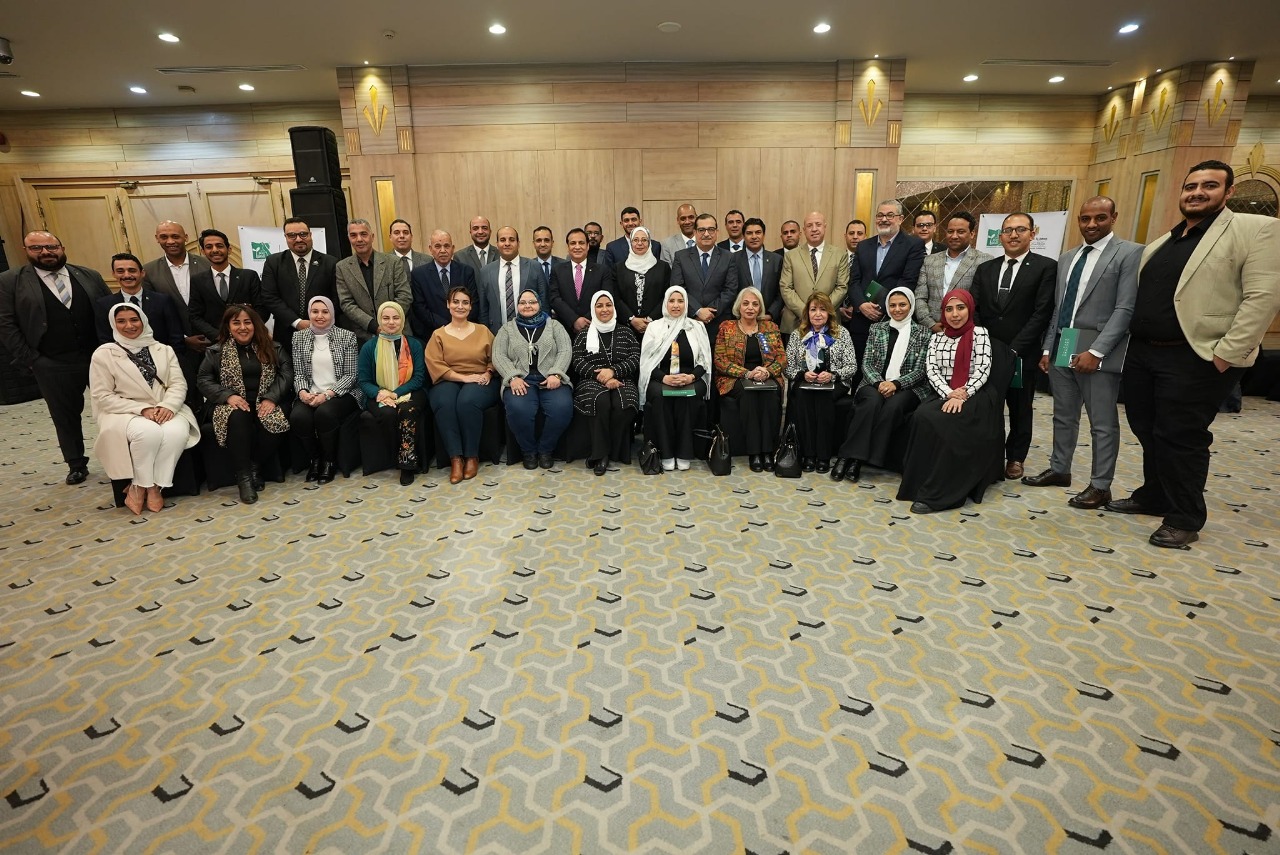
This came in the round table held by the “Misr Al Khair” Foundation on the issue of debt in Egypt, on the role of civil organizations in drying up the sources of debt in Egypt, which was organized by the “Misr Al Khair” Foundation. And the program for developing civil society associations in the presence of a number of concerned parties and members of the House of Representatives.
He said that a media plan had been prepared to deal with the file of debtors and raise awareness of their seriousness under the name “Ala Bayad” and the President of the Republic approved it, noting that the committee’s strategy depends on providing social protection and economic empowerment with attention to community guidance in addition to periodically updating the database and providing awareness programs while modifying consumer behavior.
Dr. Salah Hashem, advisor to the Minister of Social Solidarity for social policies, said that we cannot succeed. In reducing fines, unless we have a strategy to reduce poverty, pointing out that the higher the poverty rates, the more fines will result.
He also praised the role of the “Misr El Kheir” Foundation in the issue of debtors, noting that it is one of the most professional institutions working in the field of development. He saluted Dr. Ali Gomaa, for paying attention to the issue of debtors and launching many activities to serve this cause.
For his part, Mohamed Mamdouh, head of the NGO Development Program at the “Misr Al Kheir” Foundation, said that the goal is From the round table, he opened dialogue with development partners and developed a societal vision on the issue of debt in cooperation with civil society associations.
He pointed out that “Misr Al-Khair” was one of the pioneering NGOs and one of the first institutions in civil society to pay attention to the issue of debtors, stressing that the issue needs work to dry up the sources of debt, stressing that it is necessary to study all aspects related to the phenomenon in order to comprehensively address it and formulate general policies to deal with it.
Rep. Hiam Al-Tabakh, member of the Social Solidarity Committee in the House of Representatives, stressed the importance of Raising awareness and drying up the sources of debt, as we have a favorable legislative environment.
She indicated that it is important to develop a strategy to solve the problem of debt, with the presence of mechanisms and oversight tools to reduce the phenomenon.
For her part, Manal Shaheen, head of the debtors’ program at the Misr Al-Khair Foundation, said that the Foundation has been making efforts for more than 12 years to dry up the causes and sources of debt and confront the phenomenon with new mechanisms and rules, as part of its constant efforts to develop and its keenness to keep pace with successive changes and comply with... State Strategy 2030 AD, where the Foundation was alerted early to the seriousness of the debtors’ issue and its effects and risks on family and community formation and cohesion. The Foundation’s mission is based on pioneering the initiative to empower debtors economically and socially and limit the entry of new debtors into prisons while reducing the number of cases of debtors in the courts and developing a comprehensive awareness vision that achieves sustainable development and financial inclusion. The fines are so closely scrutinized in the selection processes, and criteria have been set for not selecting debtors, such as the multiplicity of cases, the large size of the debt, the seizure of public money, the debt related to a dishonorable case, and anyone who owns property such as real estate, etc., this is not subject to a fine. 49 thousand 63 of them are female
32% and their number is about 22 thousand 898. Giza Governorate ranked first in cases of grief, and the cases reached 7994, while the Red Sea Governorate ranked last with 32 cases. During the first quarter of this year, the distress of 1,500 grief-stricken people was relieved.
For his part, Dr. Youssef Al-Wardani, Chairman of the Board of Trustees of the Qudrat Misr Foundation for Development and Advisor to the “Misr Al-Khair” Foundation, presented a presentation The proposal submitted by “Misr Al-Khair” to prepare a general policy paper on the role of civil society organizations in drying up the sources of debt, as he stressed that there is no accurate number of the number of debtors in Egypt, calling for a review of the media discourse on the debt issue.
He added that there is no accurate classification of the causes of the debt issue in Egypt, indicating that the decline in economic conditions is at the forefront of the reasons, and that poverty increases with the increase in population.
The meeting aimed to open the door to discussion and dialogue between representatives of the concerned parties in light of three axes, which are: :
- The first axis: The issue of fines and the reasons leading to them
- The second axis: Policies to confront the issue of fines in Egypt
- The third axis: Institutional and legislative interventions to confront the issue of fines in Egypt
At the end of the dialogue and discussion, a number of important recommendations were agreed upon on “the role of civil society organizations in drying up the sources of fines,” to be formulated in a policy paper as soon as possible to be published and sent to the relevant authorities
A number of (40) experts participated in the meeting And a representative of different parties