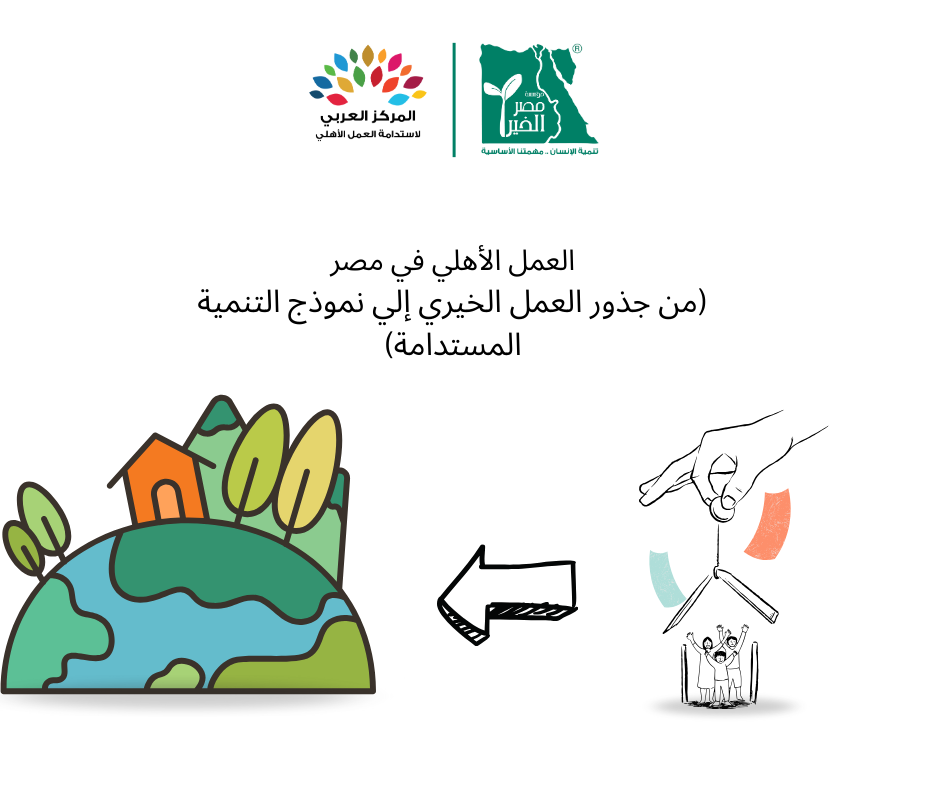
Development and civil work in Egypt: from the roots of charitable work to the sustainable development model
mso-ascii-theme-font: major-bidi; mso-hansi-theme-font: major-bidi;">Civil work in Egypt has always been an essential component of society, as it has contributed throughout the ages to providing support to the most needy groups. With the development of time, the goals and mechanisms on which this sector relies have changed, witnessing a qualitative shift in which it moved from the framework of traditional charitable work to a more comprehensive model aimed at achieving sustainable development. These transformations did not come by chance, but were the result of developments in societal concepts and needs, in addition to the economic and social changes that occurred in the world.
Development: from relief to empowerment
mso-ascii-theme-font: major-bidi; mso-hansi-theme-font: major-bidi;">In the past, the concept of development was mainly linked to direct aid and relief, as NGOs relied on providing material or in-kind support to poor families and the needy. This approach, despite its importance in alleviating poverty, had limited impact and did not achieve a fundamental change in the lives of the beneficiaries. mso-ascii-theme-font: major-bidi; mso-hansi-theme-font: major-bidi;">Over time, a new concept of development that focuses on empowerment rather than relief has begun to take shape. The goal has become to sustainably improve the lives of individuals and communities by providing them with the tools and knowledge needed to build a better future. This transformation represents a qualitative shift, as the focus has become on addressing the roots of problems rather than dealing only with their results. major-bidi;">Strategy
mso-ascii-theme-font: major-bidi; mso-hansi-theme-font: major-bidi;">The biggest change in civil society work in Egypt was its adoption of the concept of sustainable development. Work is no longer limited to providing aid, but has become part of an integrated system that seeks to achieve long-term goals.*Transformation features:-
Civil work began to adopt clear visions and strategic plans based on a deep analysis of community needs. These visions focus on finding radical and sustainable solutions to social and economic problems.
With increasing responsibilities, NGOs have realized the importance of implementing governance systems that ensure transparency and accountability. This includes setting clear policies, training personnel, and ensuring efficiency in resource management.
Sustainable Finance: Shifting from relying on random donations to searching for innovative and sustainable financing partnerships. These efforts include creating productive projects that generate income for organizations, and establishing partnerships with local and international entities.
Digital transformation has become a fundamental pillar in the development of civil work. From using databases to manage beneficiaries to launching electronic platforms for communication and fundraising, technology plays a pivotal role in improving performance and enhancing transparency.
3- Shifting towards a comprehensive development model:
mso-ascii-theme-font: major-bidi; mso-hansi-theme-font: major-bidi;">Modern civil society work in Egypt is no longer limited to charitable organizations, but has become an integrated system that includes civil society organizations, international institutions, and community initiatives. This integration contributed to enhancing the efficiency of development efforts and increasing their impact. mso-ascii-theme-font: major-bidi; mso-hansi-theme-font: major-bidi;">*Essential axes for achieving comprehensive development: mso-ascii-theme-font: major-bidi; mso-hansi-theme-font: major-bidi;">A - Empowering individuals and communities: Empowering target groups through education, vocational training, and entrepreneurship support to transform them. From recipients of aid to active participants in development. mso-ascii-theme-font: major-bidi; mso-hansi-theme-font: major-bidi;">B- Focus on the environment and sustainable development: Integrating environmental issues into development plans through projects that promote conservation. On natural resources and reducing pollution. mso-ascii-theme-font: major-bidi; mso-hansi-theme-font: major-bidi;">C - Promoting community participation: Involving individuals and communities in the design and implementation of development programs Its sustainability.Conclusion
Civil work in Egypt is witnessing a new stage of maturity and transformation, as it has become an effective tool for achieving development. Sustainable. Moving from relief to empowerment is not just a step forward, but rather a qualitative leap that responds to the challenges of the times. To ensure the success of this transformation, efforts must be combined between various stakeholders, including the government, the private sector, and civil society organizations. mso-ascii-theme-font: major-bidi; mso-hansi-theme-font: major-bidi;">.
Sources:
mso-ascii-theme-font: major-bidi; mso-hansi-theme-font: major-bidi; mso-bidi-theme-font: major-bidi;">1) State Information Servicemajor-bidi; mso-bidi-theme-font: major-bidi; mso-bidi-language: AR-EG;">) United Nations Development Program
mso-ascii-theme-font: major-bidi; mso-hansi-theme-font: major-bidi; mso-bidi-theme-font: major-bidi; mso-bidi-language: AR-EG;">3)Ministry of Social Solidarity
Written by: Abdullah Ezzat
Misr El Kheir Foundation